
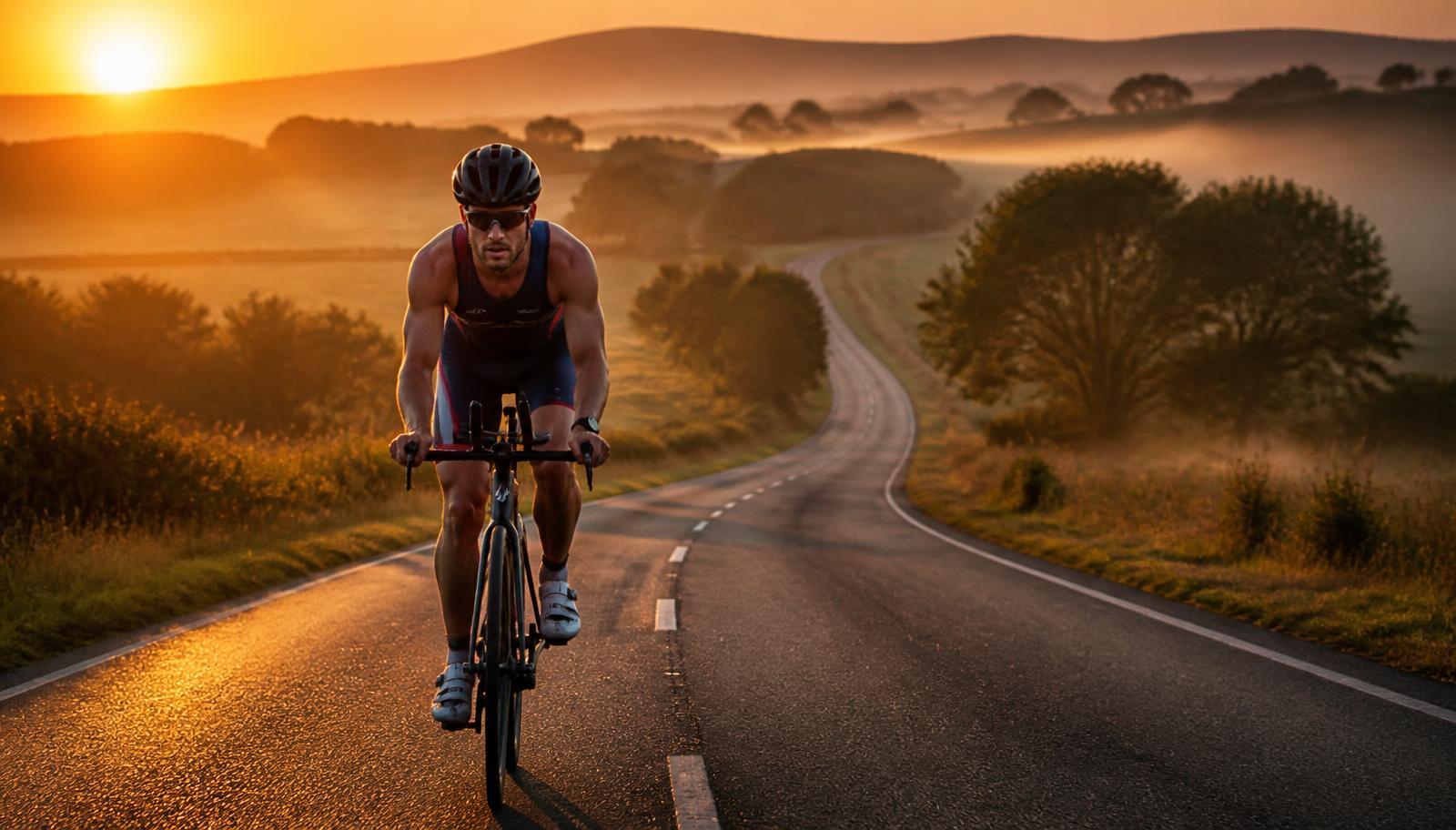
Pacing the Bike Leg
Ride hard enough to make good progress, but controlled enough that you can still run well afterwards.
The simplest way to pace the bike is to ride at an effort that feels controlled enough to leave something for the run. That applies whether it’s your first race or your fifth — and you don’t need expensive electronics to get it right.
The bucket of energy
The bike leg is where many triathletes make their biggest pacing mistake. It is easy to feel great coming out of transition, push too hard on the bike and then discover that your legs have very little left for the run.
The analogy is that you have a bucket of water (energy). You can pour it all out in the first 15 minutes or dribble it out over the whole cycle leg.
The aim is to ride hard enough to make good progress, but controlled enough that you can still run properly afterwards.
Settle into your own rhythm
For all triathlons, most triathletes should think in terms of a steady, sustainable effort rather than trying to ride as hard as possible. In the first few kilometres, resist the temptation to chase faster riders. Settle into your own rhythm, let your breathing come under control and gradually build your effort.
You do not need a power meter, expensive bike computer or heart-rate monitor to pace your first triathlon. You can pace very effectively by feel.
Simple effort scale for the bike leg
- 1–2: Very easy, barely working
- 3–4: Easy conversational pace
- 5: Moderate, still comfortable
- 6: Steady, controlled, short sentences possible
- 7: Hard, breathing strongly
- 8–10: Very hard, unsustainable for long
For most of the bike leg, aim for around 6 out of 10.
How it should feel
You should feel that you are working, but not straining. Your breathing should be controlled and you should still be able to say a short sentence.
On hills, allow the effort to rise slightly, but avoid attacking every climb. Use your gears and keep the pedals turning smoothly. Going too hard uphill often costs more energy than the small amount of time you gain.
Practise with brick sessions
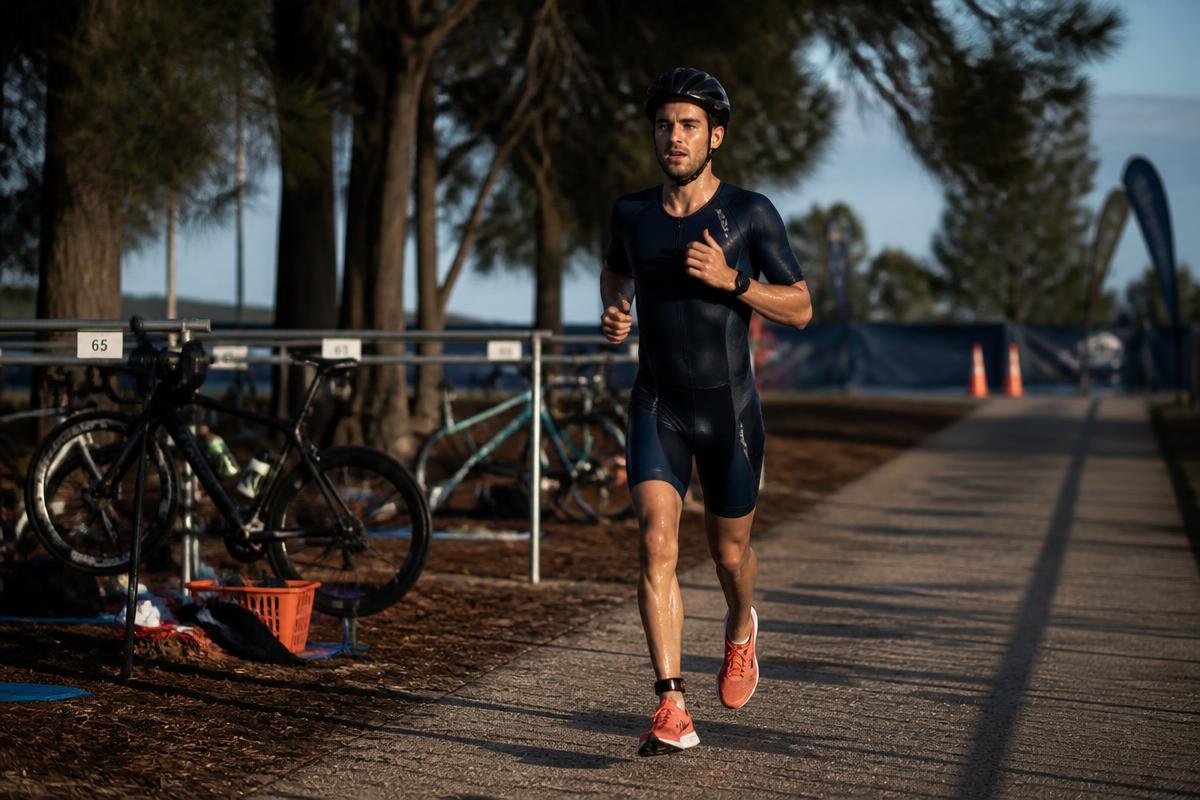
During training, practise getting off the bike and immediately running for 10–20 minutes. These brick sessions will teach you what the correct bike effort feels like.
If you finish the bike and your legs feel completely smashed, you rode too hard. If you finish and feel ready to run, you have found a sustainable pace.
Heart rate and power meters
Heart-rate monitors and power meters can be useful later because they provide objective numbers and help control effort more precisely. But they are tools, not necessities.
If you really want to get one thing, a heart rate monitor would be a good start. You need to be able to see the output while cycling, but as mentioned, do not rush out to spend money.
For your first races, learning to understand your breathing, legs and overall effort is more valuable.
The golden rule
The best bike split is not the fastest one you can ride. It is the fastest one that still allows you to run well afterwards.
Keep exploring
Find more cycling advice in the Cycling section, or head to Free Tools for practical training resources.