
Overcoming Open Water Anxiety
Practical steps for swimmers who feel nervous about lakes, seas or crowds — and why that feeling is completely normal.
Feeling nervous is normal
If you swim comfortably in a pool but feel nervous when you first enter a lake, sea or reservoir, that's completely normal.
Open water is a different environment, and feeling unsettled doesn't mean you're not cut out for it. It simply means you're learning a new skill.
Confidence usually comes from getting used to open water gradually, safely and without putting yourself under unnecessary pressure.
Why open water feels different
A pool is predictable. You have a black line to follow, hopefully a lane of your own and a wall every 25 or 50 metres where you can stop.
Open water removes those familiar reference points.
The water may be cold or murky. You might not be able to see the bottom. There's no wall to grab, waves can interrupt your breathing, and other swimmers may be close beside or bump into you.
Your body can also react strongly to cold water at first. That sudden change, combined with unfamiliar surroundings, can make your breathing feel quicker and your muscles tense.
These reactions are common. They get easier to manage with practice.
Swim position will also be different if swimming with a swim-specific wetsuit. This can be very similar to swimming with a pull buoy between your legs in a pool.
What to take to your first open water swim
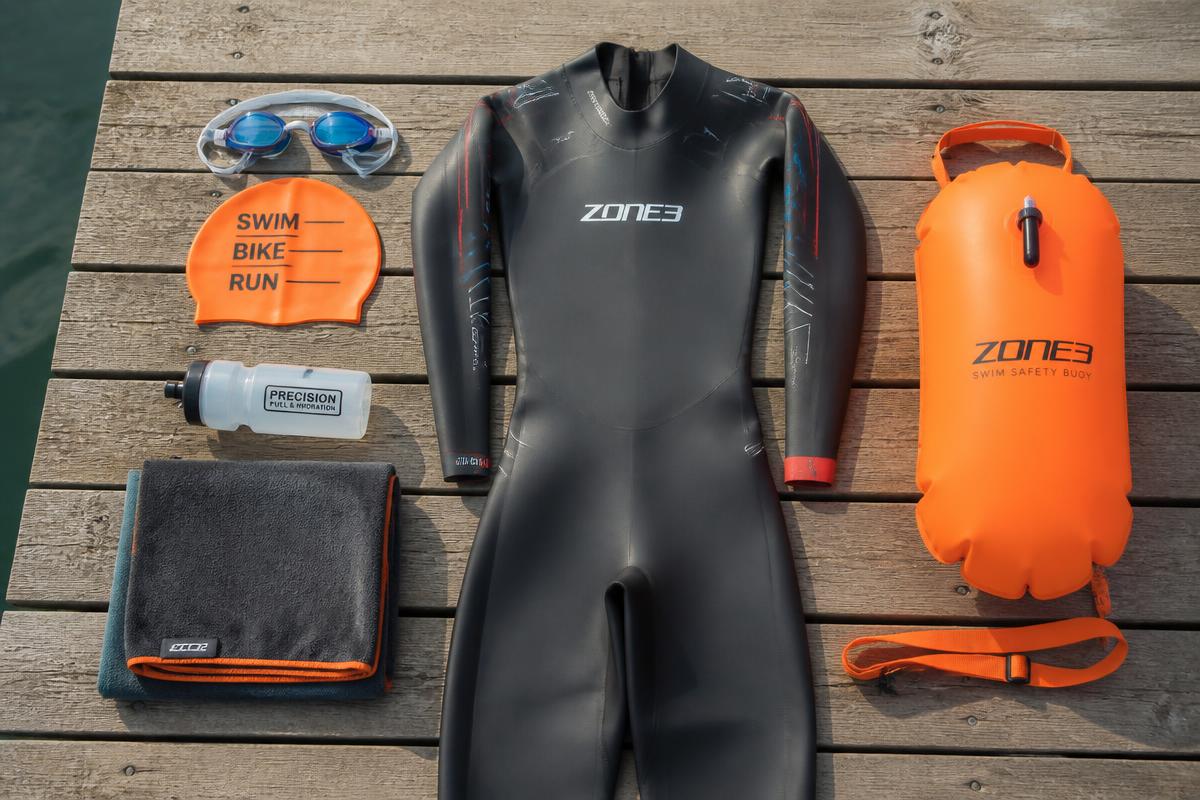
- ✓Goggles
- ✓A cap in a bright, visible colour
- ✓Neoprene swim hats are a good option so the cold water doesn't shock
- ✓Swimsuit, or better, a swimming wetsuit
- ✓Safety buoy — some double as a dry bag for car keys
- ✓Towel
- ✓Something warm to wear after swimming
- ✓Drinking water and something comforting to eat
A safety buoy is particularly important. It increases visibility, provides an additional sense of security, and is a standard for sensible open water swimming.
If you're unsure which buoy, goggles or wetsuit to choose, ask. It's better to choose equipment that's simple and practical than to buy something random.
What to do before you get in
Don't rush straight into swimming.
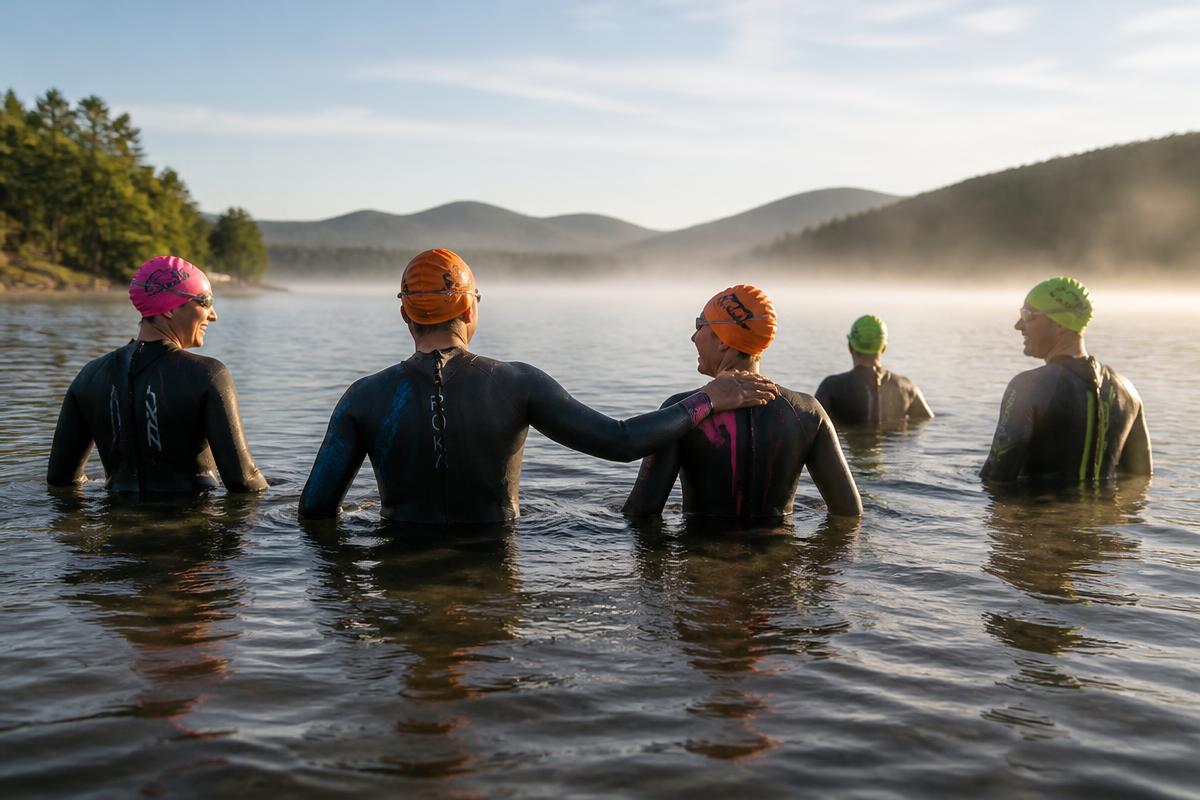
Enter gradually and give your body time to adjust to the temperature. Splash some water onto your face and neck.
Once you're comfortable, put your face into the water and practise breathing out rather than holding your breath. Then progress to floating face down to get used to the temperature and environment, then focus on slowing your breathing. Being calm is the goal.
Choose a safe, supervised swimming location and never swim alone. A brightly coloured swim cap and safety buoy can also help you stay visible.
There are numerous organised public open water swim locations — search Google for "open water swimming near me", or try swimming.org. Organised swim events provide safety craft and spotters out on the water for additional safety.
Your first few minutes
Your first goal is to settle, not to swim quickly.
It's absolutely fine to breaststroke while you get comfortable. If you're swimming somewhere with a buoy or boundary line, you can stay close to it while you find your rhythm.
If you feel overwhelmed, stop. Roll onto your back, float and concentrate on breathing slowly. Your swim buoy is your "comfort blanket".
You haven't failed because you paused. Being able to stop, reset and continue calmly is an important open water skill in itself.
If swimming with a swim-specific wetsuit, it quickly becomes very clear how buoyant you are — which is very comforting.
A quick calming routine in the water
- 1. Stop swimming and roll onto your back.
- 2. Hold your buoy and let your legs hang.
- 3. Breathe out slowly and fully, twice.
- 4. Look at the shore and pick your next short target.
- 5. Start again with breaststroke, then build back to front crawl.
Building confidence over a few sessions
Keep your early sessions simple.
Try short swimming repeats close to shore rather than heading straight for a long continuous swim. Swim with a friend or organised group and gradually increase the time or distance as you become more comfortable.
Once your breathing feels calm, start practising sighting: briefly looking forward to check your direction before returning your head to your normal swimming position.
Over time, you can also practise swimming around buoys and alongside other swimmers.
The aim isn't to prove how tough you are. It's to finish each session feeling a little more familiar with the environment.
Race day
If your first event includes an open water swim, give yourself space.
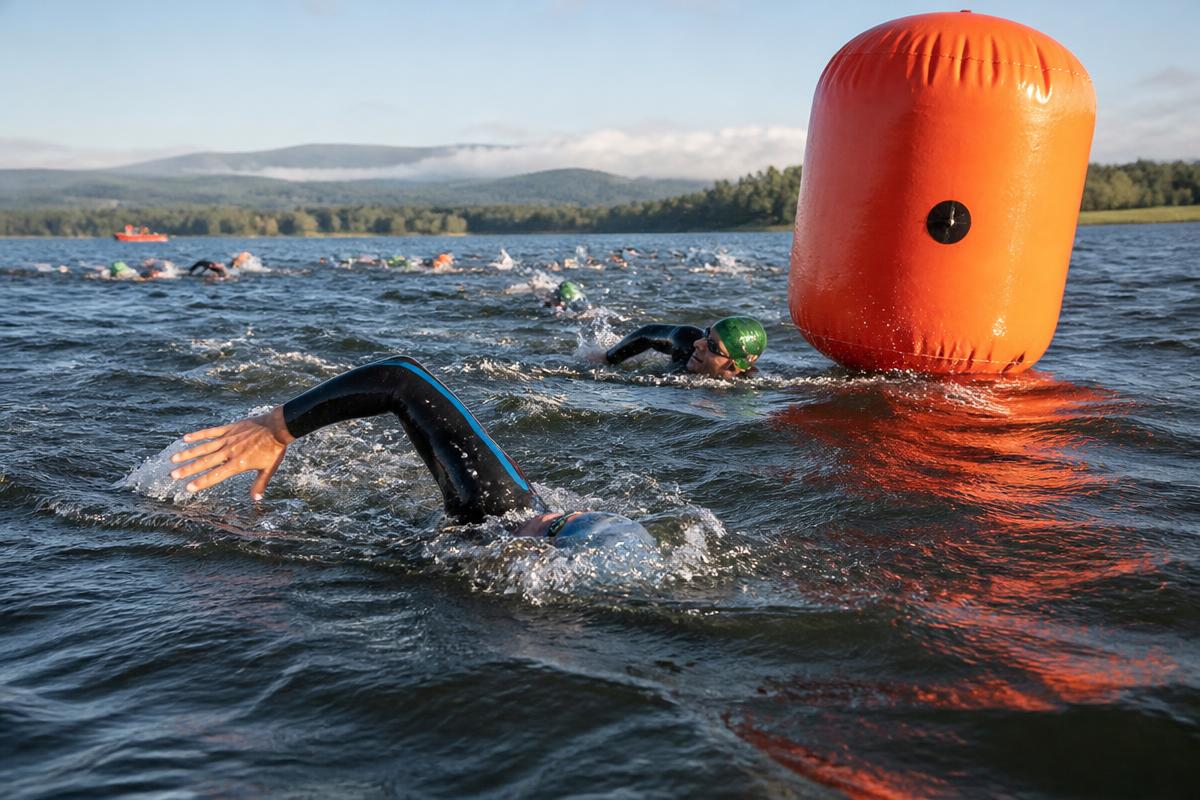
Starting at the back or towards the side of the group can help you avoid the busiest part of the start. Begin at a pace that allows you to control your breathing instead of immediately chasing other swimmers and gasping for air, which will just increase any anxiety.
Remember that you can breaststroke, float or pause whenever you need to. You are also permitted to hold onto a safety canoe or board to regain your composure, as long as it is not propelling you forwards.
Swimming around the buoy is something to understand and be comfortable with. In your first event, take a look while approaching and, if busy, keep wide of the turning buoy — it looks innocent until you have to swim around it in a group.
A calm swim that leaves you ready for the rest of your event is far more useful than burning energy fighting the water.
What about drafting?
As you become more confident in open water, you can learn to swim behind or alongside another swimmer to save energy. It's a useful triathlon skill, but for now, focus on swimming comfortably in your own space and keeping control of your breathing and direction.
What helped me most
I have lost count of the number of my initial races where I started confidently, swam the first 100 metres too hard and then suddenly panicked. There was no pool wall to hold onto, my breathing became short and my mind started imagining the worst.
What helped was simple: stop rushing, control my breathing and start swimming again slowly.
The biggest change came during a deep-water start. I was around 150 metres from shore waiting with the other swimmers when I realised just how buoyant my wetsuit made me. I was floating easily, and sinking suddenly felt very unlikely.
That gave me a lot more confidence.
Now I can get in and swim without the same fear, even in cold water. The biggest lesson is that open-water confidence comes with experience.
Start calmly, control your breathing and let confidence build one swim at a time.
You don't have to force it
Open water confidence rarely appears in one session. It builds through repeated, manageable experiences.
Cold water also deserves respect. Learn the safety guidance for your swimming location, understand the signs of cold water problems, and get out if you feel unusually cold, confused, weak or unwell.
Open water isn't a test of courage. It's another swimming skill — and it can be learned.
Keep exploring
Visit our Swimming section for more swimming advice, or head to Free Tools for practical resources to support your training.