
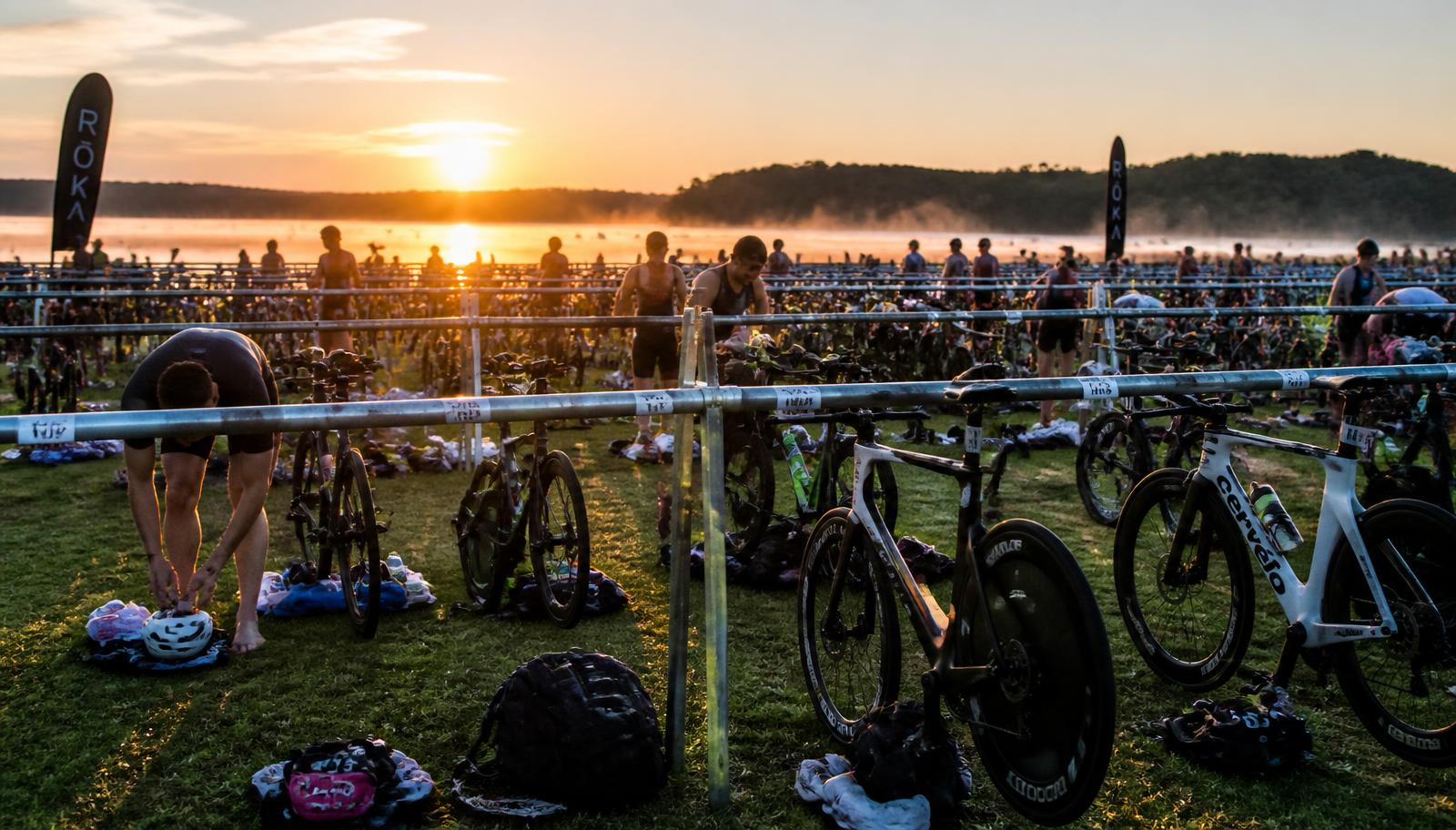
Race Day Transitions Made Simple
A calm, organised transition is usually a fast transition.
The fourth discipline
Transition is often called the fourth discipline of triathlon. You do not need to be the fastest athlete through transition, but a simple, organised setup can save time, reduce stress and prevent silly mistakes on race day.
T1 is transition 1, between the swim and bike legs. T2 is transition 2, between the bike and run legs.
Know the timings
One of the most important things to do before race day is to read the race information carefully. Transition will usually open at a set time and may also have a specific opening time for your race, wave or start group. It will also close at a set time before racing begins.
Be very aware of these times. If transition closes at 7:00am, for example, arriving at 7:05am may mean you are too late to rack your bike or set up your kit. Check the athlete guide in advance and allow plenty of extra time for parking, registration, toilet queues and walking to transition.
Get to know the transition area
Before the race starts, take a few minutes to understand the transition area. Find the swim entrance, bike exit, bike entrance and run exit. Then locate your bike and use a fixed landmark such as a tree, sign or row number to help you find it quickly.
Transition areas can look very different when they are full of bikes and athletes. A quick walk through the flow before the start will help you move with confidence when it matters.
Keep your kit simple and organised
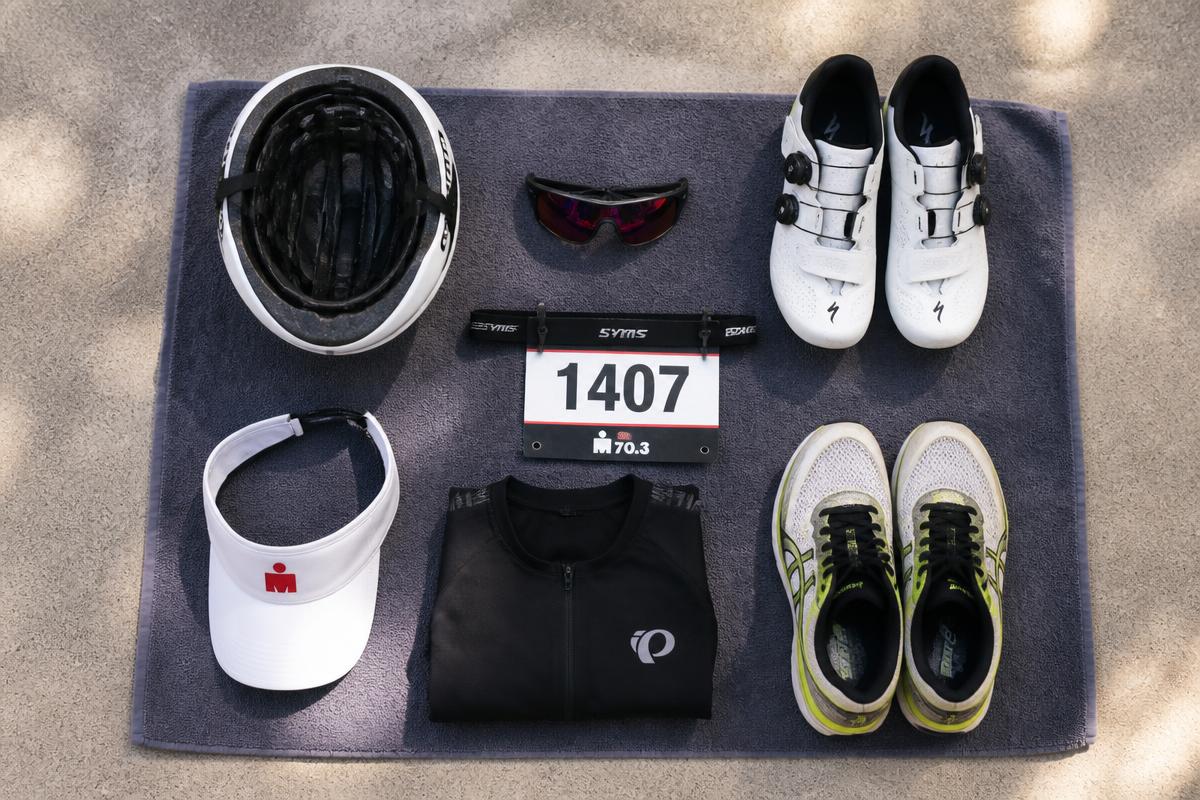
Place your bike shoes, helmet, sunglasses and race belt where you can reach them easily. Your helmet should be open and ready to put on, with your sunglasses nearby or inside the helmet if that works for you. Have your running shoes ready for T2, along with your race belt and hat or visor.
The advice is to use an elasticated belt that you will pin your race number to. On the bike the number is on your back, and then on the run you just need a quick spin to have it on your front. These are not expensive, or you could even make one at home.
Avoid bringing unnecessary equipment into transition. More kit usually means more clutter, more decisions and more opportunities to forget something — and the space allocated may not fit a lot of equipment.
T1: swim to bike
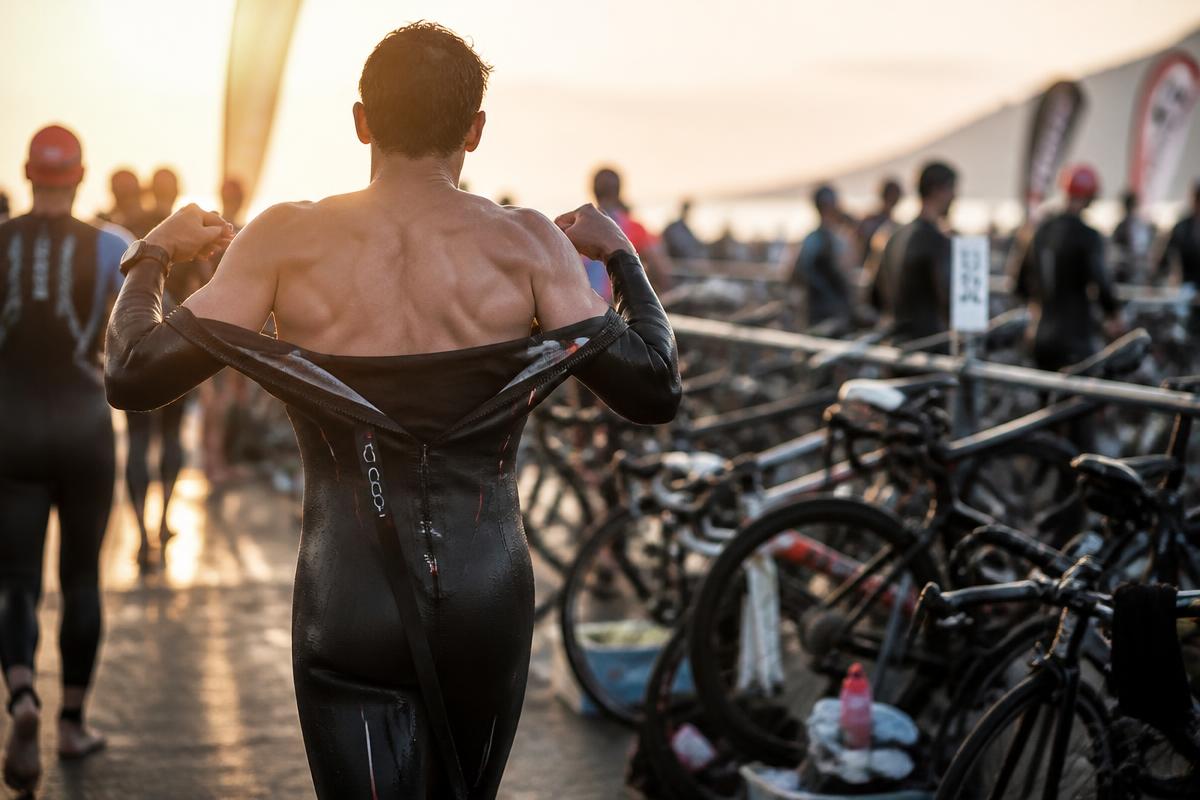
- 1.Take your arms out of your wetsuit and remove your goggles and swim cap as you move towards your bike
- 2.Pull the wetsuit down to your waist, then remove the legs once you reach your spot
- 3.Put on your race number, cycling shoes and helmet, and fasten the helmet before touching your bike
- 4.Take your bike to the mount line before getting on
T2: bike to run
- 1.Dismount before the dismount line and run to your racked bike
- 2.Rack your bike, then remove your helmet only after the bike is secure
- 3.Change into your running shoes and turn your race belt so your number is on your front
- 4.Start the run calmly and settle into your rhythm
Practise before race day
For beginners, one of the biggest improvements comes from practising transitions before race day. At home, lay your kit out exactly as you plan to on race morning and rehearse moving from swim to bike and bike to run.
You do not need to be perfect. You just need to be familiar enough with the routine that you can do it calmly when your heart is pounding and your mind is racing.

Keep it simple on race day
- ✓Know the race timings and when transition opens and closes
- ✓Know where you are going: swim in, bike out, bike in, run out
- ✓Know where everything is and use a fixed landmark to find your bike
- ✓Practise the routine until it becomes automatic
A calm transition is usually a fast transition.
Keep exploring
Read more in the Triathlon section, or try Swimming if you are working on building confidence for the swim start.