
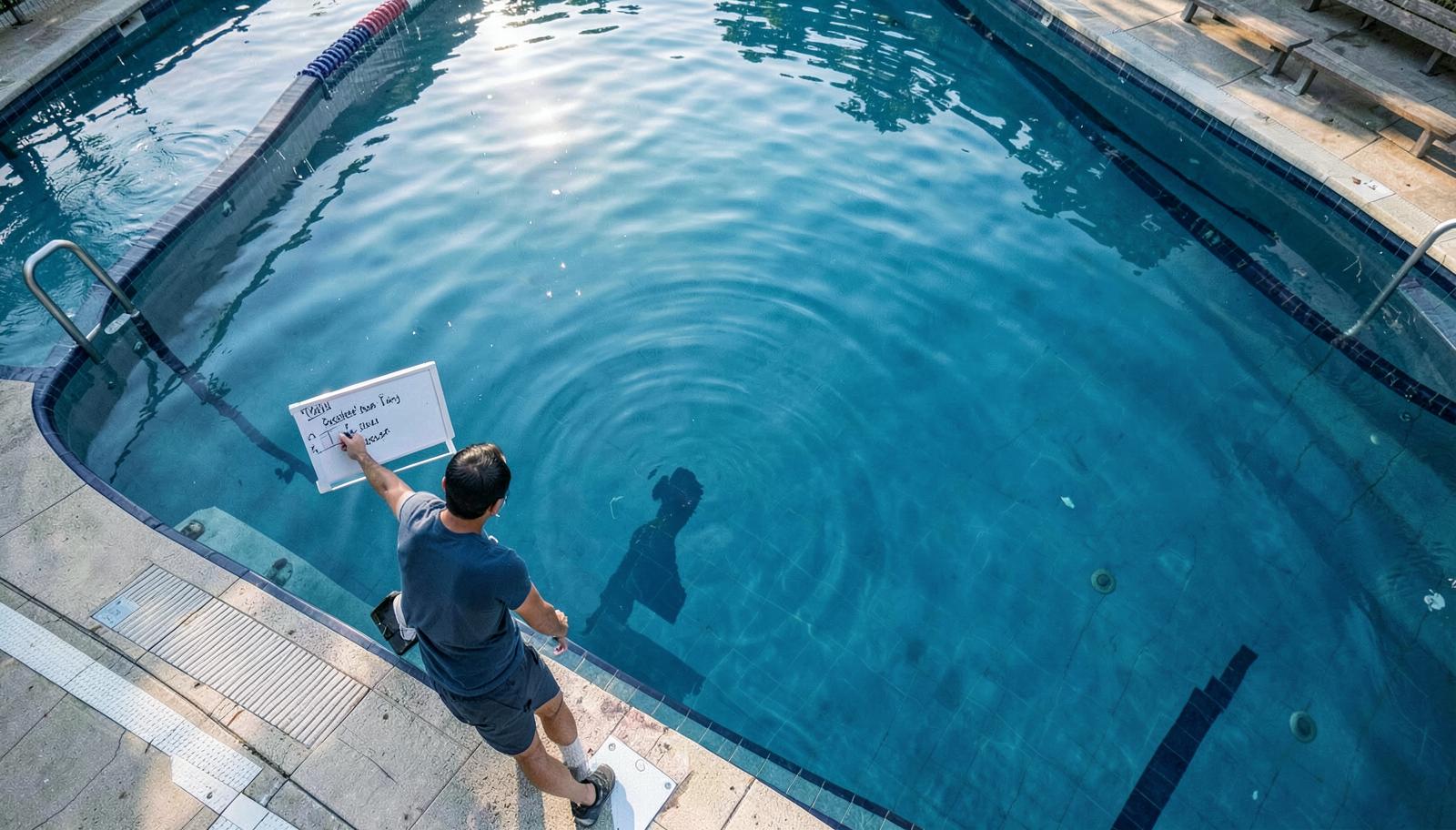
How to Read a Swim Session
Decode sets, reps, rest and pace so you can follow any pool plan with confidence.
Technique first, mileage later
In every pool, you will see people who simply swim up and down for the whole session without spending any time working on technique. That may improve general fitness, but swimming is a highly technical sport, and repeating poor technique and fighting the water over hundreds of lengths only reinforces bad habits. Being able to swim 100 lengths badly twice a week is not the goal.
The aim is to become more efficient in the water, using focused drills to improve body position, stroke timing, breathing and overall form so that each length costs you less energy. YouTube is a great resource.
As mentioned in Swim Drills and Techniques for Triathlon, the initial plan would be two swim sessions a week: one purely for drills and the other to put these into practice through a continuous swim (with breaks).
How to read a swim session
Swim sessions can look confusing when you first see them written down, but most plans use the same basic language. Once you understand sets, repetitions, rest and pace, they become much easier to follow.
If a session says 4 × 50m, this means swim 50 metres (normally 2 lengths of the pool) four times. If it says 4 × 50m with 20 seconds rest, swim 50 metres, rest for 20 seconds, then repeat until you have completed four.
A set is simply a group of swims. For example:
A simple session example
- 4 × 50m easy
- 4 × 25m drill
- 4 × 100m steady
Each line is a separate set.
Effort levels
You may also see different effort levels. Easy should feel relaxed and controlled. Steady means you are working but could continue for quite a while. Hard means a stronger effort that you would only maintain for a shorter period.
Beginners do not need to worry too much about exact speeds. Learning what each effort feels like is more important.
Useful drills for triathletes
Drills are short exercises designed to improve one part of your stroke. Useful drills for beginner and intermediate triathletes include:
Drills to practise
- 1.Catch-up drill – keep one arm extended in front until the other hand almost catches it. This helps with front-quadrant swimming and encourages a longer, more controlled stroke, not pulling your arm out early at the end of the stroke.
- 2.Single-arm drill – swim using one arm while the other stays extended. This helps you concentrate on body position, rotation and the underwater pull.
- 3.Kick drill – practise a small, relaxed kick coming mainly from the hips rather than bending heavily at the knees.
- 4.Fingertip drag – lightly drag your fingertips across the surface during the recovery. This encourages a relaxed arm and higher elbow.
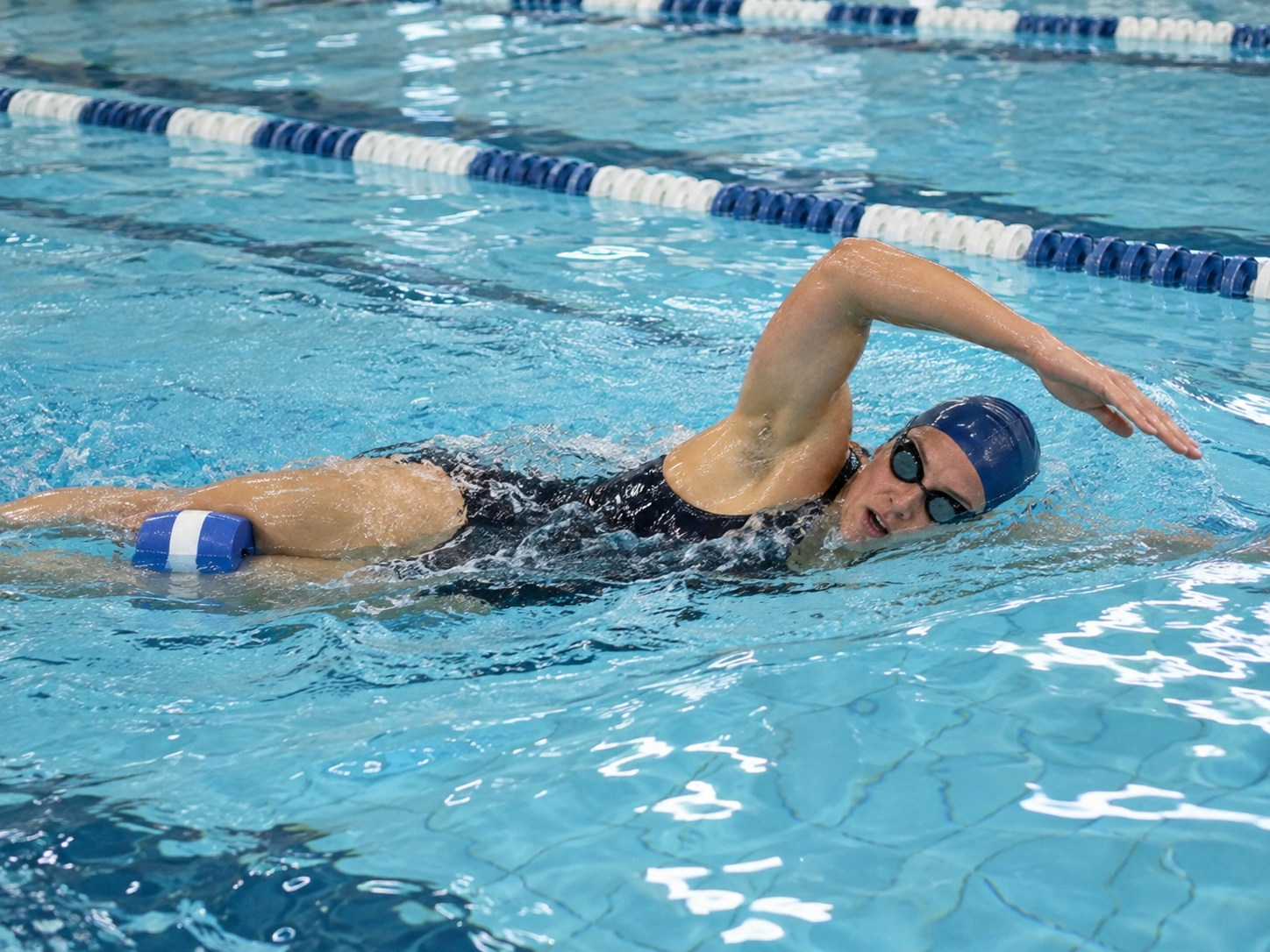
- 5.Pull buoy swimming – place a pull buoy (a shaped float) between your thighs and swim mainly using your upper body. This can help you concentrate on your catch, pull and body position. This also mimics swimming in a wetsuit providing lower body flotation.
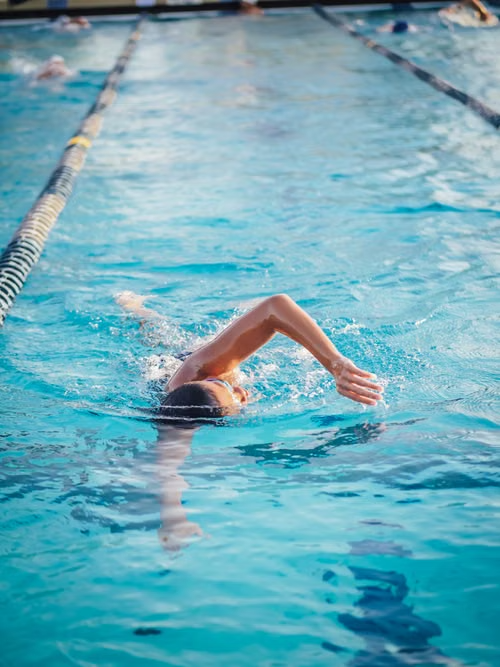
Drill and swim combinations
You may also see 25m drill / 25m swim, which means practise the drill for the first length and then swim normally while trying to keep the technique you just practised.
Most sessions should begin with an easy warm-up and finish with a relaxed cool-down.
Do not rush the drills
Do not rush through drills simply to complete the distance. Their purpose is to improve technique. Also always adhere to the rest time as this is set to improve your swim fitness; resting excessively will not achieve the desired results.
A good session is about more than metres
A good swim session is not just about how many metres you complete. It is about understanding what each part of the session is trying to improve.
Keep exploring
Read more in the Swimming section, or try Swim Drills and Techniques for Triathlon for a full set of technique ideas.