
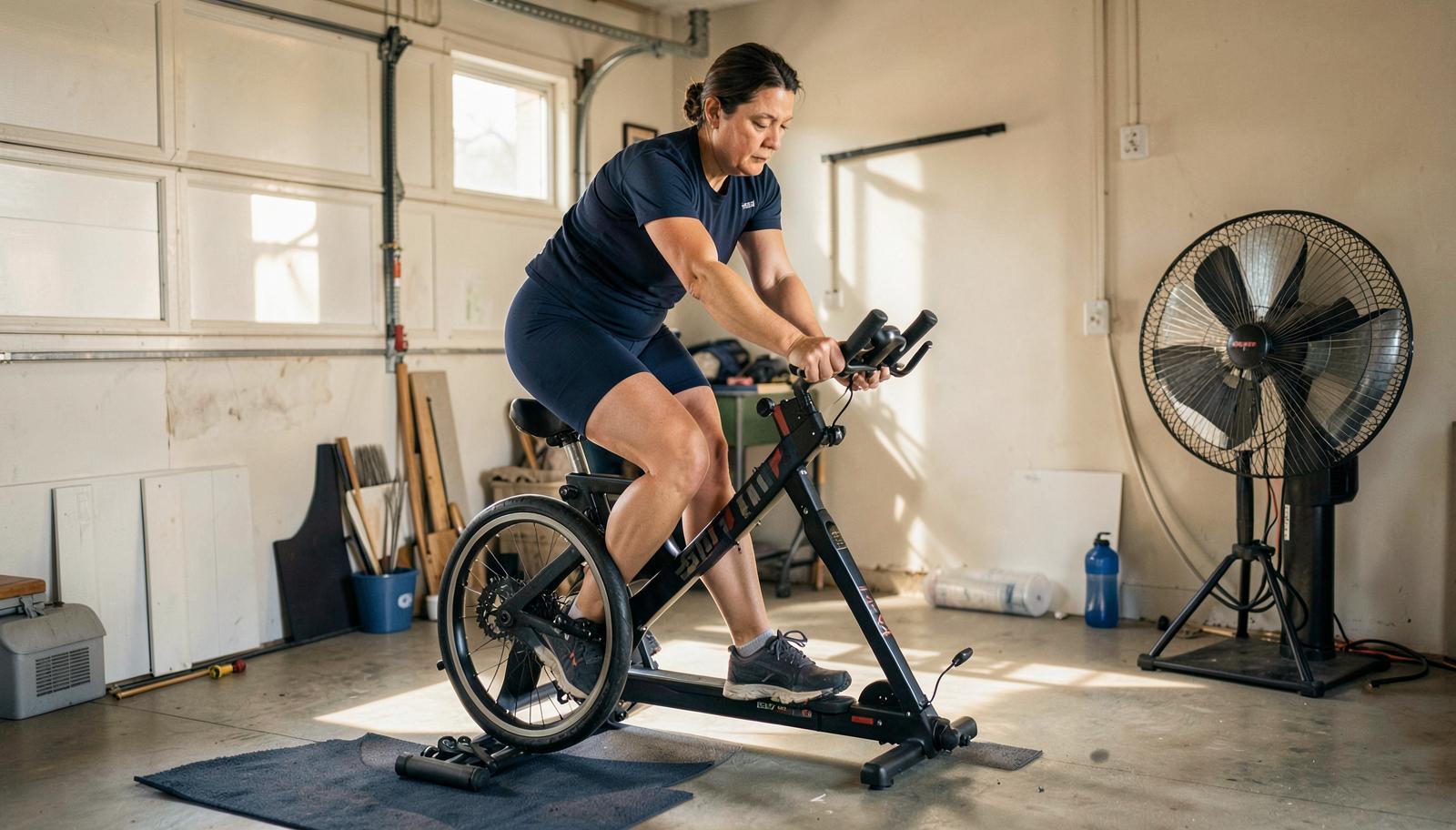
Indoor vs Outdoor Training: Making It Work
Use the turbo for structured fitness and the road for real bike skills — without spending a fortune on gadgets.
Make every minute count
Winter, bad weather and busy schedules do not have to stop your triathlon training. In fact, indoor cycling can be one of the most time-efficient ways to improve because there are no traffic lights, junctions or descents interrupting the session. Once you start pedalling, every minute can have a purpose.
You do not need expensive equipment
You do not need a Peloton bike, smart trainer, power meter or even a heart-rate monitor to train effectively indoors. These may be useful purchases later, but they are certainly not essential when you are starting out. What you do need is structure and a way of measuring progress.
Simply sitting on a turbo trainer and pedalling for an hour may help maintain fitness, but if every session is the same and you have no way of comparing one week with the next, it is difficult to know whether you are actually improving.
Use a simple effort scale
For beginners, one of the easiest ways to measure effort is with a 1–10 Rate of Perceived Exertion (RPE) scale. An easy endurance ride might feel like 4/10, where you can comfortably hold a conversation. A steady working effort would be around 5–6/10, while 7–8/10 should feel hard and is better suited to shorter intervals.
For example, try warming up for 10 minutes before completing 4 × 5-minute efforts at around 6–7/10, with 2 minutes of easy cycling between each effort. Finish with an easy cool-down. Write down what gear you used, how hard the session felt and, if you have a smartwatch, your average heart rate.
The important thing is to make some sessions repeatable. If you complete the same workout four weeks later and it feels easier, your heart rate is lower, or you can use a slightly harder gear, that is evidence that your fitness is improving.
Cadence and consistency
Cadence can also give you something simple to measure. Cadence means how quickly you are turning the pedals. If you do not have a cadence sensor, count how many times one foot completes a full pedal revolution in 15 seconds and multiply that number by four.
If you are using a basic wheel-on turbo trainer, try to keep the setup consistent. Use similar tyre pressure, roller tension and resistance settings each time. This makes it much easier to compare one session with another.
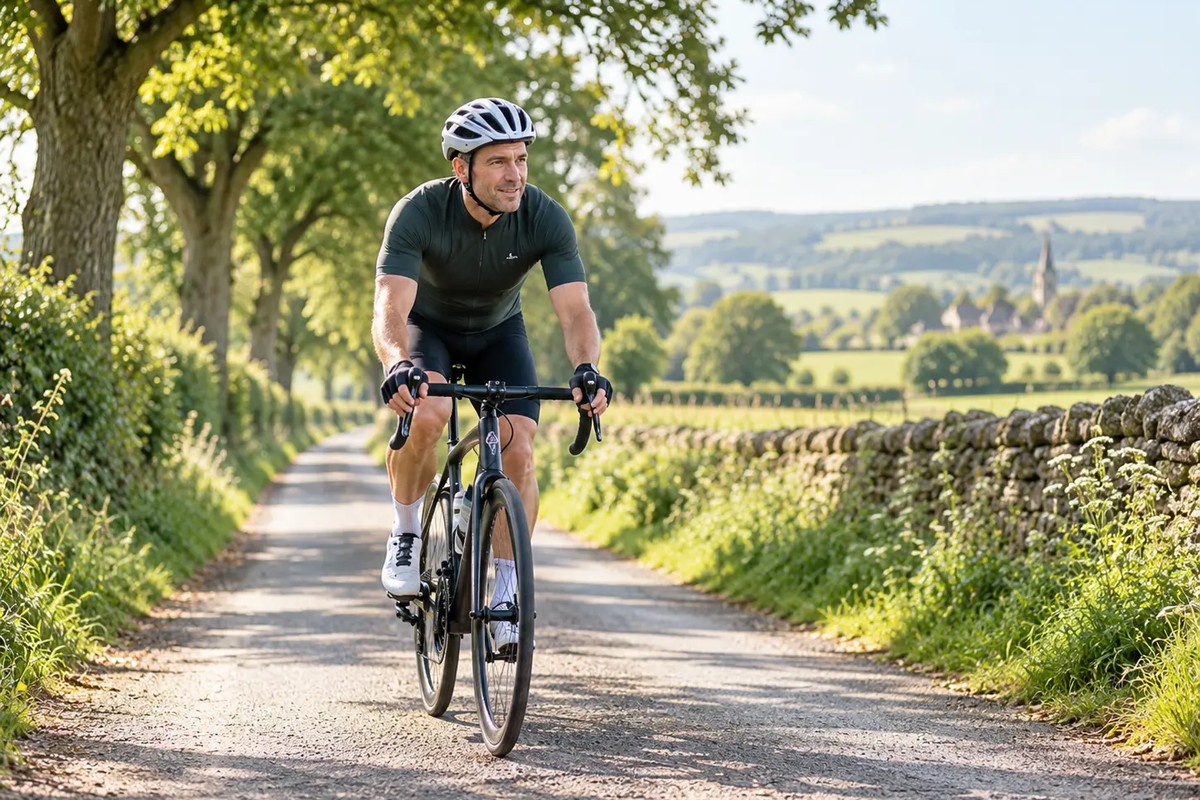
Keep riding outside
Indoor training is excellent for building fitness, but it should not completely replace outdoor cycling. Before race day you still need to practise bike handling, braking, cornering, climbing, changing gears and riding confidently on the road. A good approach is to use the turbo for controlled fitness sessions and ride outside whenever conditions and time allow.
A fan is also one of the best pieces of equipment you can have indoors. Without the natural airflow you get outside, you can become very hot very quickly, which makes the same effort feel much harder.
Making a basic turbo trainer measurable
Even if you do not own a power meter, some training platforms can provide an estimated power figure. For example, TrainerRoad's VirtualPower can work with certain basic turbo trainers.
A small inexpensive Bluetooth or ANT+ speed sensor measures how quickly your rear wheel is turning. TrainerRoad combines this information with the known resistance characteristics of your particular turbo trainer and estimates your effort in watts.
It is not the same as having a true power meter, but it can provide a useful and repeatable number for training. With a relatively inexpensive speed sensor, an old basic turbo can potentially become a much more structured and measurable training tool, provided your trainer is supported by the software.
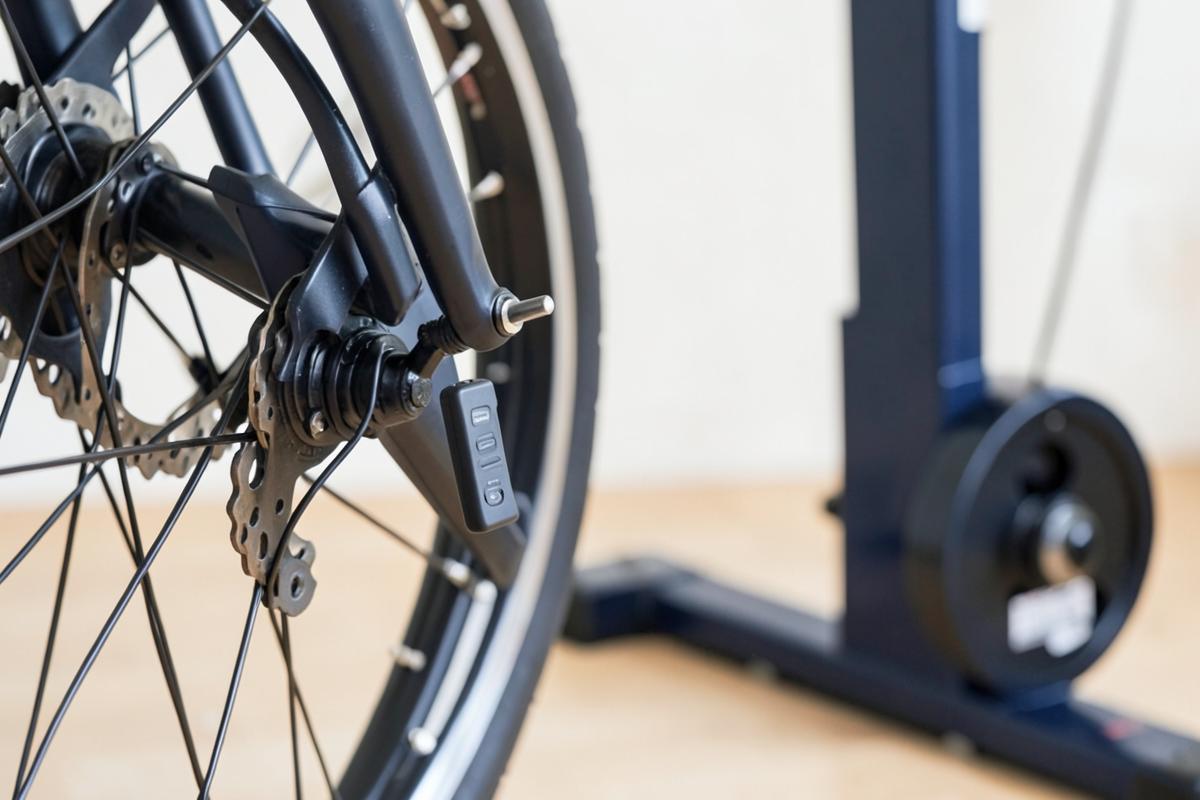
What is a power meter?
A cycling power meter measures how hard you are actually pushing on the pedals and displays this effort in watts. The higher the wattage, the harder you are working.
Power can be extremely useful for structured cycling and triathlon training, but a beginner does not need a power meter. You can make excellent progress using perceived effort, a smartwatch or heart-rate monitor, cadence, VirtualPower or simply repeatable sessions.
Do not worry about having the most expensive equipment. The important principle is much simpler: every indoor session should have a purpose. Know what you are trying to achieve, record what you did and give yourself something you can compare against in the future.
The beginner takeaway
Consistency and measurable progress will improve your cycling far more than simply spending an hour pedalling in the garage. Use the turbo for focused, repeatable sessions, get outside to keep your skills honest, and add gadgets only when they genuinely solve a problem you have already noticed.