
Sprint vs Olympic Distance or longer: Which Should You Choose First?
Pick the distance that fits your fitness, time and lifestyle — not just the longest one you think you can finish.
Start with your life, not the race distance
Choosing your first triathlon distance should be based on your current fitness, available training time, swimming confidence and lifestyle, rather than simply picking the longest event you think you can complete.
Super Sprint triathlon
A Super Sprint triathlon is one of the shortest and most beginner-friendly forms of triathlon. Distances vary between events, but a typical race is around:
- ✓400m swim
- ✓10km bike
- ✓2.5km run
Some races use a shorter pool swim or slightly different bike and run distances, so always check the individual race information before entering.
A Super Sprint is ideal if you are completely new to triathlon, returning to exercise after a long break, or simply want to find out whether you enjoy combining swimming, cycling and running.
You do not need huge amounts of training, but you do need enough time to build confidence across all three disciplines. A simple week might include two short swims, one bike ride, one run and occasionally a short bike-to-run brick session.
Sprint distance
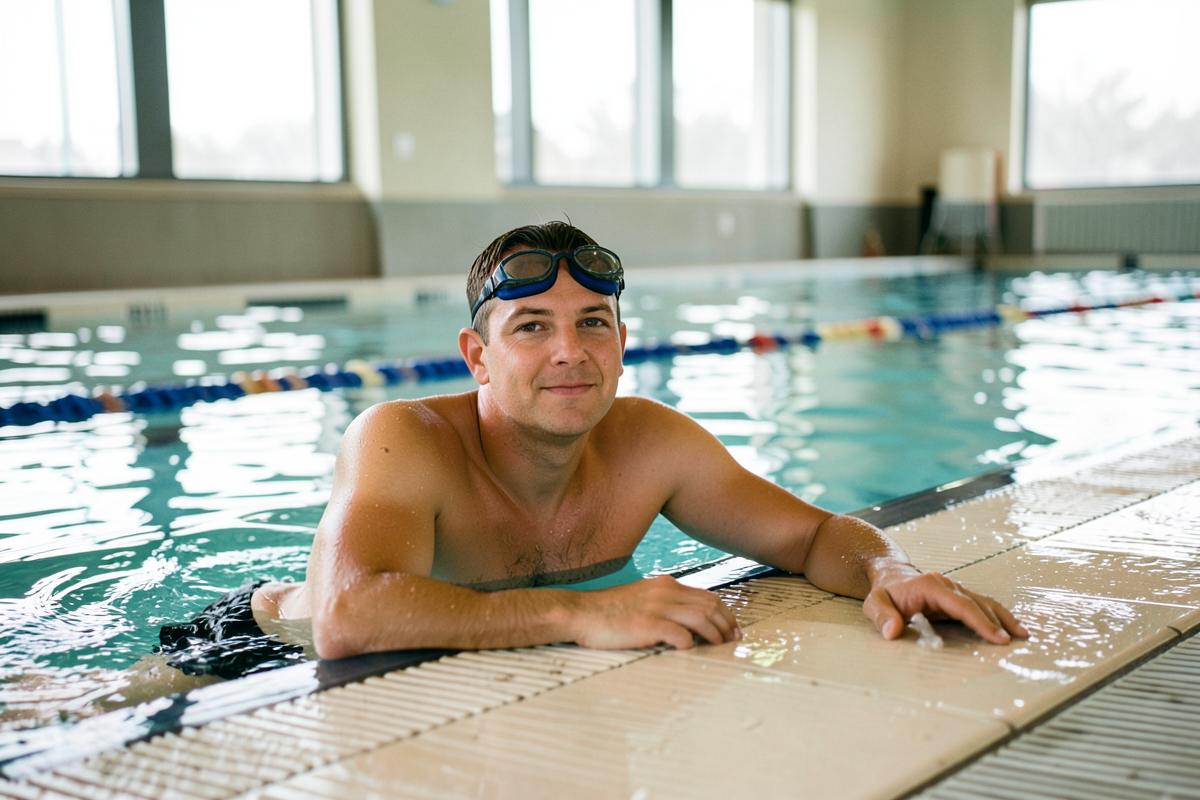
A Sprint triathlon is usually the best starting point for most people. The standard distance is around a 750m swim (you can find races that swim in either an indoor pool or open water), a 20km bike and a 5km run. Take a look at the course — maybe a flatter one as a starter, or one that is really close to home. It gives you the full triathlon experience without requiring the same training volume as an Olympic-distance race. For someone balancing work, family and other commitments, Sprint training can usually be fitted into the week more comfortably.
Olympic distance
An Olympic-distance triathlon typically consists of a 1,500m swim, 40km bike and 10km run. This is a much bigger endurance challenge and requires more consistent training (see the hours-a-week training section), longer sessions and greater attention to recovery, nutrition and pacing.

A few honest questions
Ask yourself a few simple questions. Can you already swim continuously for a reasonable distance? Do you have open water swimming experience (see the open water swim section)? Are you comfortable cycling for an hour or more? Can you run, or run/walk, 5km without excessive fatigue? If the answer to most of these is no, a Sprint is likely to be the better first target.
Lifestyle matters just as much as fitness. A training plan only works if you can follow it consistently and have the support of your partner and family. It is far better to train properly for a shorter event than to enter a longer race without having enough time to prepare. You will get a lot more out of the event if you finish well and do not have to drag yourself through a miserable final 5km run/walk/shuffle.
What about Half and Full distance?
A Half-distance triathlon is a significant step up and should not be underestimated. The longer swim, 90km bike and half-marathon run require a considerable amount of training. Attempting one without adequate preparation can result in a very long, uncomfortable and sometimes miserable race day. That is not the goal of sport. Triathlon should challenge you, but it should also be something you can enjoy and feel proud of completing — and return to race again.
Some athletes will have the time, background and commitment to prepare properly for a Half distance. A smaller number may even feel they can rise directly to the challenge of a Full-distance triathlon. However, this is a massive undertaking. The training commitment is substantial, and race day itself can last many hours. We regularly see athletes having extremely difficult experiences, or missing the traditional 17-hour Full-distance cut-off, because they have underestimated the preparation required — and sadly never return to triathlon.
In reality, even if your long-term goal is a Half or Full-distance race, the best approach is usually to start small and build up. A Sprint teaches you open-water swimming, transitions, pacing, nutrition and race-day organisation. An Olympic distance then gives you the opportunity to develop endurance and confidence before moving further.
A sensible progression roadmap
For most beginners, a sensible progression might look like this:
- 1Step 1 — Sprint Triathlon: Learn how race day works. Practise open-water swimming, transitions, pacing, fuelling and putting all three disciplines together.
- 2Step 2 — Another Sprint or Olympic Distance: Build confidence and endurance. There is nothing wrong with doing several Sprint races before moving up.
- 3Step 3 — Olympic Distance: Become comfortable with longer periods of continuous exercise and start learning more about pacing, hydration and nutrition.
- 4Step 4 — Half Distance: Only move up when you can consistently commit to the increased training and longer weekend sessions. Nutrition and pacing now become much more important.
- 5Step 5 — Full Distance: Consider this once you have developed a strong endurance base, understand how your body responds over long distances and genuinely have the time to prepare properly.
There is no requirement to keep moving up in distance. You may discover that Sprint or Olympic racing is exactly what you enjoy. Longer does not automatically mean better.
The beginner takeaway
Even if your ultimate ambition is to complete a Half or Full-distance triathlon, starting small gives you the opportunity to learn, make mistakes and build confidence without those mistakes becoming major problems. There is no rush. Build experience, respect the distance, enjoy the journey and progress when you are ready — not simply because the next race is longer.
Keep exploring
Read What is a Triathlon? or What to Expect at Your First Triathlon.